How Do We Really Trust The AI Models Making Decisions In Healthcare?
9 December 2025
We're increasingly relying on third-party Model-as-a-Service (MaaS) solutions in the cloud for everything from radiology scans to patient risk stratification. But this raises a critical governance question:
When a hospital pays for a specific AI model, how do we verify that the cloud vendor is actually running that exact model? What's to stop them from using an older, cheaper, or unvalidated version to cut costs? And how do we prove that the sensitive patient data (PHI) we've sent to the cloud hasn't been silently corrupted by a server error or network glitch?
In healthcare, trusting our vendors isn't enough. We need to be able to verify.
I've been digging into the complex world of AI auditing and came across a fascinating (and highly technical) paper by Wang et al. (2025) titled "AI-Auditor: A Data Auditing Framework for Enhancing the Trustworthiness of AI Models."
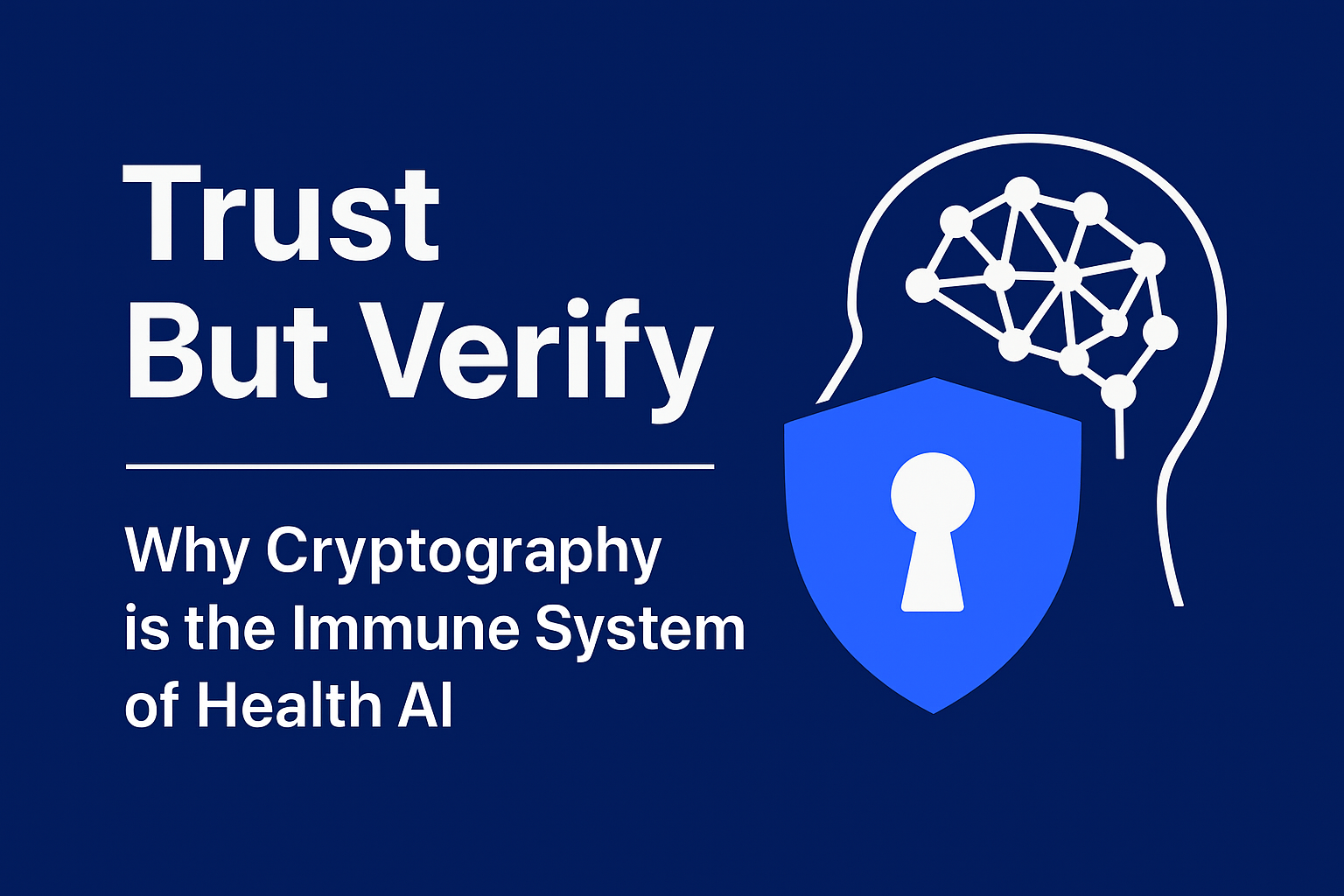
It proposes a framework for exactly this: a cryptographic "challenge-response" system. It allows an organisation (like a hospital) to remotely and efficiently audit its cloud provider. It can verify both data integrity (is the data safe?) and model alignment (is this the correct AI model we paid for?).
This moves us from a "trust me" model to a "prove it to me" model, which is precisely what patient safety demands.
It's a technical solution, but it solves a fundamental trust, safety, and liability problem. How is your organisation currently validating the third-party AI models you use?